The Man from Earth: A Witness to the Unraveling

Jerome Bixby, epoch change, and the strange energy hunger of artificial intelligence

By Ovanes Oganisian — September 15, 2026

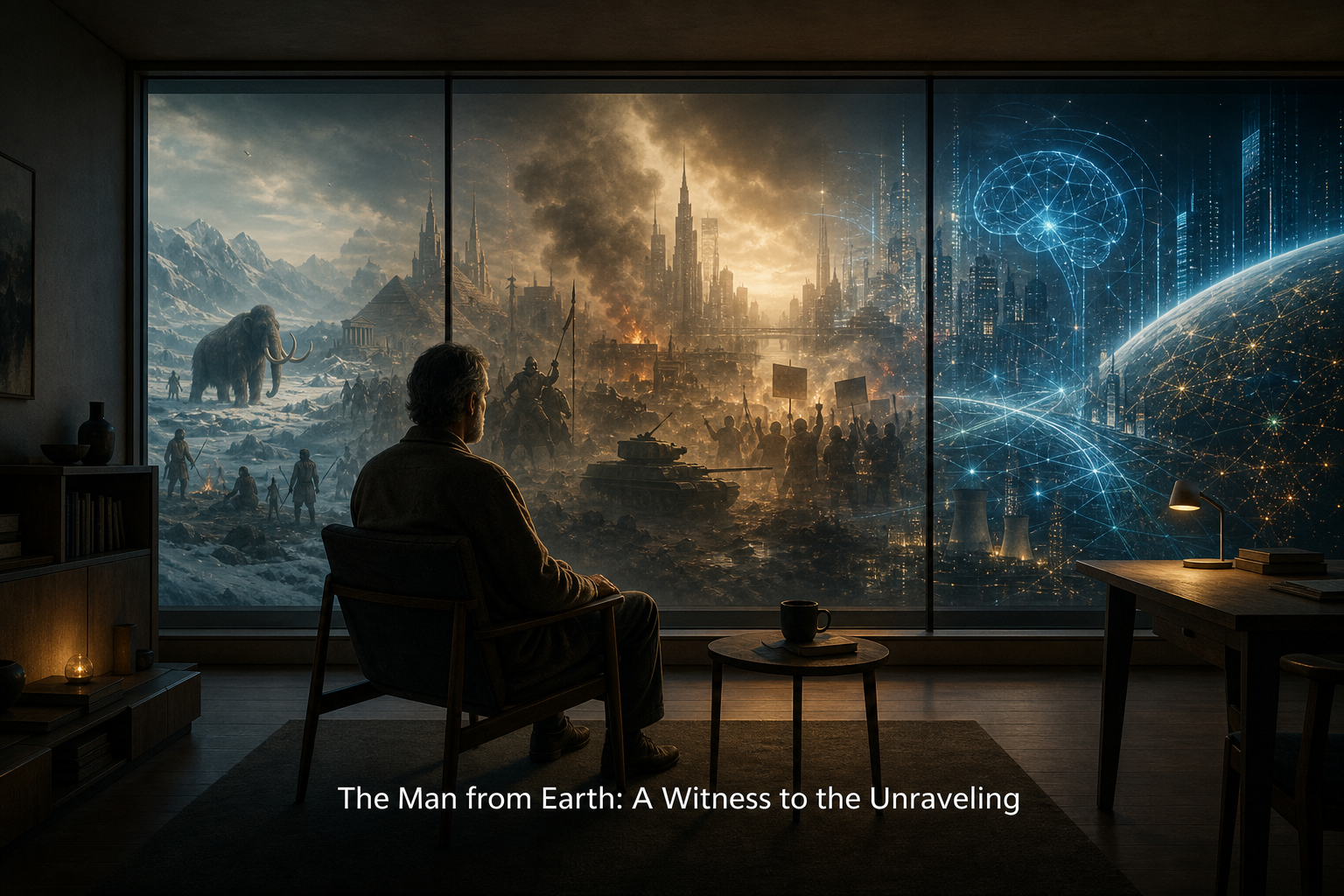
He sits in a room. The walls are plain. The furniture is ordinary. Outside, the world is ending—or beginning—depending on which epoch you prefer. He has been here before. Fourteen thousand years, give or take. He has seen the ice retreat and the cities rise. He has watched empires fold into dust and be forgotten. He has witnessed the stitching together of civilizations, and the tearing apart of the same. And now, in this quiet room, he tells his friends a story they cannot believe.

The Man from Earth was Jerome Bixby's last work, conceived in the early 1960s and completed on his deathbed in April 1998. He dictated it to his son Emerson. A screenplay about a man who has lived through all of human history. A witness.

What does a witness see? He sees patterns. He sees the same stories told with different costumes. He sees the fabric being woven and unwoven, the threads rearranged, the cloth worn thin in the same places.

The Man from Earth is not just a film about immortality. It is a film about epoch change: what a witness sees when civilizations mistake their temporary arrangements for permanence.

The film is esoteric in the truest sense. It does not argue. It suggests. It places a man who has lived for fourteen thousand years in a single room with a group of academics and lets the implications unfold. What if the stories we tell about ourselves—the myths, the religions, the histories—are all just versions of events that one man actually witnessed? What if the truth is not something we discover but something we have forgotten?

And the timing. Bixby completed the screenplay in 1998, the same year Russia defaulted on its sovereign debt and Long-Term Capital Management collapsed. The film was released in 2007, one year before the financial crisis that would reshape the global economy. These are not predictions. They are meditations. But the meditations keep arriving just before the world changes shape.

The Four Episodes: Threads in the Cloth

Bixby wrote four episodes of Star Trek: The Original Series. Each one is a thread in a larger design.

"Mirror, Mirror" (1967). A transporter accident swaps Kirk and his crew with their brutal counterparts from a mirror universe. The same people, the same faces, but the moral fabric is inverted. The episode aired on October 6, 1967, in a year when America was deeply polarized over civil rights, foreign wars, and generational change. The mirror universe is not a fantasy. It is a warning that the pattern is contingent. It could have been otherwise.

In a world where peaceful conflict resolution and enlightenment ideals were the aspiration, the mirror showed the alternative: conquest, coercion, suspicion, unilateral action. The episode suggested that humanity's future depended on collaboration and reason—qualities missing from the savage mirror universe.

"By Any Other Name" (1968). Aliens from Andromeda hijack the Enterprise. The crew must use human emotions—greed, jealousy, love—to defeat them. The soft power of feeling against the hard power of logic. In a year when the world was in revolt, when students and workers were rising against the machine, Bixby suggests that the irrational is not weakness. It is a weapon.

"Day of the Dove" (1968). A malevolent energy being traps the crew in an endless war with the Klingons. It feeds on their violence. The only way to escape is for both sides to refuse to fight. This aired on November 1, 1968, in the shadow of the Tet Offensive, which had shattered public confidence in the Vietnam War just months earlier.

The episode is a direct allegory for the Cold War: the Federation and Klingons, like the United States and Soviet Union, are compelled to coexist despite their ideological chasm. The message is the message of the age: the cycle of violence is a prison. The only escape is to stop feeding it. Chekov's delusion of a brother killed by Klingons—a fabrication implanted by the entity—epitomizes how collective memory can be weaponized to justify violence.

"Requiem for Methuselah" (1969). The crew meets Flint, a man who has lived for six thousand years. He has been Da Vinci. He has been Brahms. He has been Merlin. He is lonely. He creates an android companion, Rayna, to ease that loneliness. The episode is uneven, but the seed is there. What does a man who has seen everything want? What does he need? The answer, Bixby suggests, is simple. He wants someone to talk to. He wants not to be alone.

The episode aired on February 14, 1969. That same year, Apollo 11 would land on the moon—a unifying global event that showcased human achievement even as the world seemed to be tearing itself apart. The conjunction of the moon landing and Woodstock, of technological triumph and countercultural rebellion, was not entirely accidental. Apollo became a litmus test in the culture wars: many believed it would reinvigorate a country that had lost its way, while others saw it as a colossal waste of resources needed at home. Bixby's Flint, a man who has seen everything and wants only quiet companionship, is a counterpoint to the grand ambitions of the age.

The World in Flames: 1968-1969

The context for these episodes is crucial. In 1968, the Tet Offensive shattered public confidence in the Vietnam War. Martin Luther King Jr. was assassinated in April, sparking riots across American cities. Robert F. Kennedy was assassinated in June, minutes after winning the California primary. Student protests in Paris nearly brought down the French government. Soviet tanks crushed the Prague Spring in Czechoslovakia. The Democratic National Convention in Chicago descended into police violence. Richard Nixon was elected president, promising to restore "law and order."

In 1969, the world continued to fracture and coalesce in equal measure. Apollo 11 landed on the moon in July. Woodstock drew hundreds of thousands of people to a farm in upstate New York. The Stonewall riots marked the birth of the modern gay rights movement. The Manson family murders shocked the nation. In Libya, Muammar Gaddafi overthrew the monarchy in a coup.

Bixby's episodes were written and aired against this backdrop. "Day of the Dove" is a direct allegory for the endless, self-destructive conflict that defined the era. "Requiem for Methuselah" offers a different meditation: what does history look like from the perspective of someone who has seen it all? What endures, and what is worth preserving?

The Gap: 1969-1998

Between the last Star Trek episode and the completion of The Man from Earth, the world was woven and unwoven many times.

On August 15, 1971, President Richard Nixon addressed the nation and announced what became known as the Nixon Shock. He suspended the dollar's convertibility into gold, effectively ending the Bretton Woods system of fixed exchange rates that had governed the international monetary order since 1944. Under Bretton Woods, foreign currencies were fixed in relation to the U.S. dollar, whose value was expressed in gold at $35 per ounce. By the 1960s, a surplus of U.S. dollars caused by foreign aid, military spending, and foreign investment threatened the system. The United States did not have enough gold to cover the volume of dollars in circulation.

Nixon's decision was intended as a ploy to force surplus countries like Germany and Japan to revalue their currencies. Instead, because the dollar was the lynchpin of the system, it brought the entire architecture down. By March 1973, the major currencies were floating against each other, and the modern era of international finance had begun.

The collapse of Bretton Woods prompted a fundamental rethink about what would give stability to the international monetary system. The new thinking was that stability would come less from fixed exchange rates and more from domestic policies directed toward domestic stability—orderly growth with low inflation. This was a profound shift. National governments were now free to pursue their own monetary policies, but the global system was now subject to the whims of currency markets and speculative capital flows.

Then came the oil shocks. In October 1973, during the Jewish holy day of Yom Kippur, Egyptian and Syrian forces attacked Israel. When the United States and the Netherlands resupplied the Israeli military, Arab members of OPEC imposed an oil embargo. The price of oil doubled, then quadrupled. A second oil shock followed in 1979, triggered by the Iranian Revolution. The Shah fled, Ayatollah Khomeini took control, and Iranian oil output collapsed. In the United States, gasoline lines stretched for blocks.

By the late 1970s, inflation had become entrenched in the American psyche and economy. In August 1979, President Carter appointed Paul Volcker as Fed chairman. Volcker raised interest rates aggressively. The policy worked—inflation fell—but it came at a cost: recession, unemployment, bankruptcies, and a deep restructuring of global finance.

This was the moment the world changed shape. The era of cheap energy, stable exchange rates, and Keynesian demand management came to an end. In its place: floating currencies, deregulated markets, and a new financial architecture that would eventually produce the 2008 crisis.

Then the Soviet Union collapsed. In December 1991, the leaders of Russia, Ukraine, and Belarus signed the Belavezha Accords, declaring the Soviet Union dissolved. Gorbachev resigned on Christmas Day. The bipolar world that had defined Bixby's adult life—the world that gave Star Trek its Klingons and its Cold War allegories—collapsed into something new and uncertain.

In August 1998, Russia defaulted on its sovereign debt. Long-Term Capital Management, a hedge fund with positions so large that its collapse threatened the entire financial system, lost its equity in weeks. The Federal Reserve organized a rescue. The interbank market seized. The world held its breath.

Bixby died in April 1998. He did not live to see the crisis. But he had finished the screenplay. The witness had spoken.
The Witness Returns: 2007

The Man from Earth was released in 2007. It was not a commercial success. It was barely a film at all—shot on a low budget, set almost entirely in one room, driven by dialogue and ideas. But it found an audience. People who watched it found themselves drawn into the question: what if?

What if a man had lived through all of it? The rise of agriculture, the birth of cities, the writing of holy books, the burning of libraries, the stitching together of civilizations and the tearing apart of the same.

What would he see? He would see that the fabric is always being remade. He would see that the pattern is never finished. He would see that the same threads keep appearing—greed, fear, love, hope—woven into new configurations.

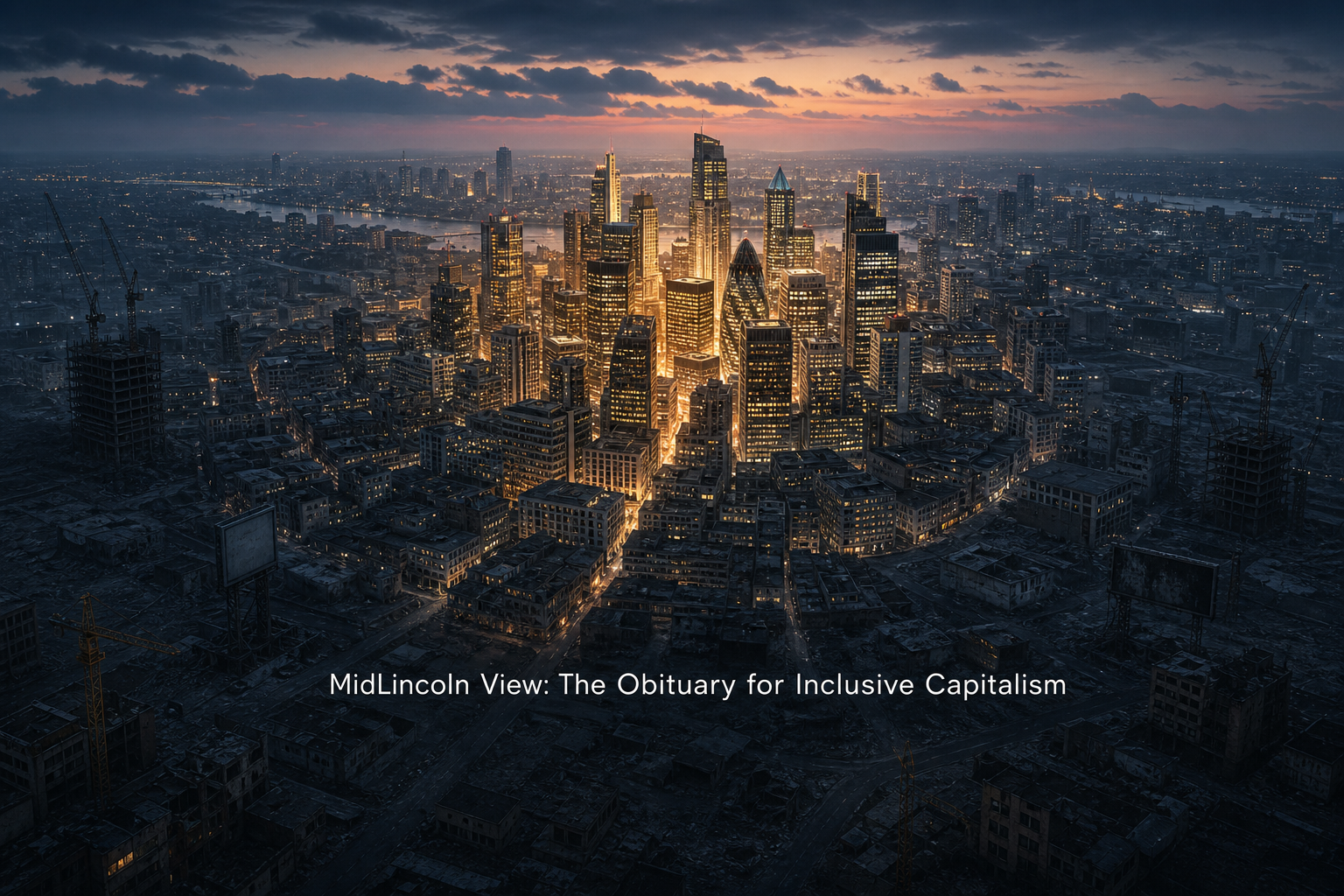
And then, in 2008, the financial crisis hit. The system that had been woven together in the deregulation decades came apart at the seams. The fabric frayed.

Was this a coincidence? Bixby's film was not a prediction. It was a meditation. But the timing was striking.

The Sequel: 2017

The Man from Earth: Holocene was released in 2017, written by Emerson Bixby and directed by Richard Schenkman. The title is significant. The Holocene is the geological epoch that began roughly 11,700 years ago—the period of climatic stability that allowed human civilization to emerge. Oldman, at 14,000 years old, predates the Holocene. He is a relic of an earlier, wilder world.

In the sequel, Oldman is hiding as a college professor. Four students discover his secret. His body is beginning to deteriorate. The immortality that defined him is failing. The stable conditions that allowed his quiet, anonymous life are ending.

The film was not well received. Critics complained that it spent too much time on the students and their detective efforts, rather than continuing the cerebral discussion of the first film. But the central observation remains: the transition from Holocene to Anthropocene is not just a geological event. It is a lifestyle event. It changes where we live, how we work, what we value, and how we anchor our lives.

The Pattern of Now

The world is in an almost irrational mode. Markets behave in ways that defy explanation. The old frameworks—discounted cash flows, earnings multiples, GDP forecasts—were built for a different epoch. They assume that the future will resemble the past. They assume that the ground will not shift.

But the ground is shifting.

The Age of Pisces yields to the Age of Aquarius, or perhaps the Holocene surrenders to the Anthropocene. The language changes depending on whether one prefers myth, astronomy, geology, or finance. But the intuition is the same: the old arrangement is no longer stable.

The change of epoch coincides with a recalibration of economy and lifestyle. Is this recalibration only in the beginning mode? What so drastically new is around the corner?

The New Renaissance and the Energy Hunger

The new renaissance in health treatment. Digitization. Distancing. The vulnerabilities of lifestyles centered on bigger cities and megapolises. The energy shift.

But there is a new force in this transition that Bixby could not have anticipated: artificial intelligence. And AI has a hunger that no previous technology has possessed.

The numbers are stark. Gartner forecasts global data center electricity consumption will reach 565 terawatt-hours in 2026, a 26% increase from 2025. AI-optimized servers alone are projected to consume roughly 175 TWh in 2026, growing by more than 80% year over year. By 2027, Gartner expects AI-optimized server power consumption to surpass conventional server power consumption.

The constraint is no longer only chips. It is power. As Gartner analyst Linglan Wang put it, compute-intensive AI workloads are driving unprecedented data center power growth, and AI capacity is increasingly constrained by power availability.

This is the Anthropocene made manifest. Human activity—in this case, the collective decision to pursue artificial intelligence—is now reshaping not just software and labor markets, but the energy systems that sustain civilization.

Two Paths, One Fork

The world is responding in two directions.

The fossil path. The United States has re-established energy security and energy dominance as political language, and in 2026 the Department of Energy announced up to $500 million in Defense Production Act funding to support coal-fired power plants and new coal export infrastructure. The language is strategic: power is not merely a commodity. It is an input into national capacity.

The renewable path. China has taken the opposite approach at extraordinary scale. Official Chinese data reported that renewable energy accounted for about 60% of the country's installed power generation capacity by the end of 2025. The National Energy Administration reported roughly 2.34 billion kilowatts of renewable capacity, with renewable generation supplying about 38% of electricity and new renewable generation covering the increase in electricity demand.

The question is not which path is morally superior. The question is which path can scale fast enough. A gas turbine ordered today will run for decades. A transmission line permitted now, after years of development, will shape siting for decades. Nuclear plants brought forward by tech-sector procurement will still be generating long after the current AI models have been forgotten.

The Orbital Solution

And then there is the orbital answer: leave the planet's surface.

In early 2026, SpaceX filed a request with the Federal Communications Commission to deploy up to one million solar-powered satellites that would serve as data centers for artificial intelligence. The filing framed the constellation as a way to meet accelerating demand for AI computing power and even described it as a step toward a Kardashev II-level civilization—a society capable of harnessing the full power of its star.

Whether this is visionary or absurd remains to be seen. Experts have pointed to the obvious problems: orbital congestion, debris risk, radiation effects on chips, cooling, launch cadence, replacement cycles, communications latency, cost, and the sheer political complexity of putting a planetary-scale compute layer above everyone's head.

But the fact that it is being proposed at all—that the AI energy problem is severe enough to make orbital computing a serious consideration—tells us something about the epoch we are entering.

The Anchor Question

The Holocene's key characteristic was urbanization. Babylon, Athens, Rome, Jerusalem, Constantinople, London, Paris, Vienna, Moscow, Berlin, Tokyo, Mexico City, Shanghai, Hong Kong. The city was the anchor. The city gathered labor, knowledge, capital, culture, politics, and ritual into density.

What is the new model for anchoring life? Campuses? Financial institutions? Entertainment and catering? Data centers? Energy corridors? Orbital networks?

Or perhaps the anchor is no longer physical in the old sense. Perhaps the next stage of human civilization will not be defined only by where we live on Earth, but by what we launch beyond it.

Is there synergy when so many people live close to each other? Or is another model of lifestyle possible?

The witness has seen empires rise and fall. He has seen the ice retreat and the cities grow. He has seen the fabric woven and unwoven. But he has never seen this: a civilization so hungry for computation that it begins to look to the stars for power.

The Witness Speaks

He sits in a room. The walls are plain. The furniture is ordinary. Outside, the world is ending—or beginning—depending on which epoch you prefer.

He has been here before. He has seen the fabric woven and unwoven. He has seen the threads rearranged. He has seen the cloth worn thin in the same places.

But this time is different. This time, the hunger is not for land or gold or souls. It is for computation. For tokens. For the electricity to run the machines that think.

The Man from Earth is not just a film about immortality. It is a film about what a witness sees when civilizations mistake temporary arrangements for permanence. And perhaps that is why it keeps returning to us now: because our own arrangement is beginning to look temporary.

He does not know what comes next. He only knows that the pattern is never finished. The fabric is always being remade.

And he waits.

Current Opportunities and Consulting Offers

MidLincoln Opportunity

Sun in the Morning

redsunam.com · B2B2C Guided Change Platform

A route-based system that helps users navigate concrete personal change while enabling narrow themed deployments for organizations.

Current Focus Public opportunity page live. Investor access, deck requests, and product review route through MidLincoln.
View Opportunity
MidLincoln Opportunity

Prime Mining

Deep-Tech Blockchain Protocol

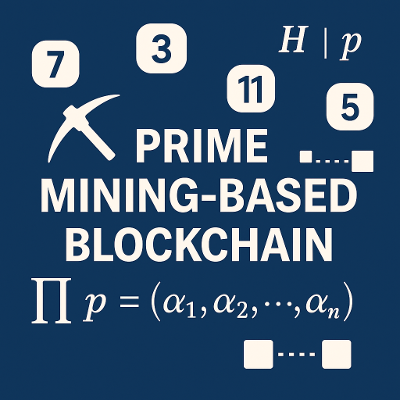
A deterministic prime-based blockchain architecture built around useful computation, cooperative verification, and post-quantum-oriented infrastructure.

Current Focus Frontier protocol opportunity. Public page frames the research, protocol path, raise logic, and investor fit.
View Opportunity
MidLincoln Opportunity

TradeFlow

Global Trade Finance Platform

A global invoice financing and trade finance operating platform for SMEs, counterparties, and capital partners.

Current Focus Invoice financing first, then broader cross-border trade workflows, underwriting, and capital orchestration.
View Opportunity
MidLincoln Research & Advisory

Modern Ranking Systems

Equity & Sovereign Selection Offering

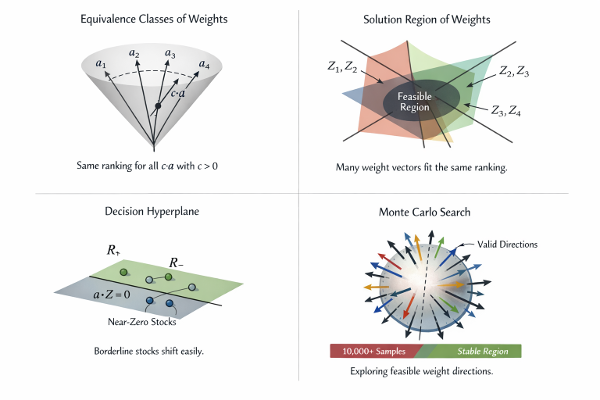
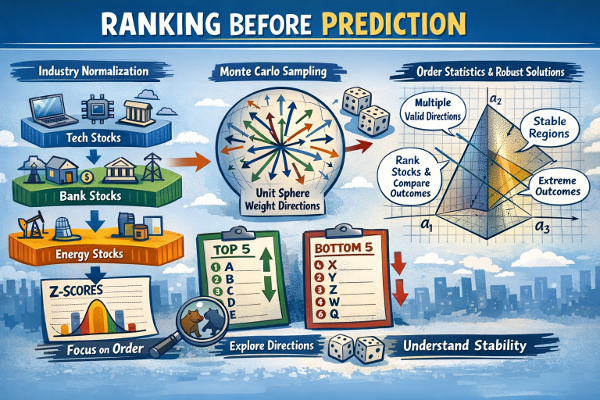
Contextual ranking research and advisory for equity selection, sovereign ranking, and model-stability diagnostics under regime uncertainty.

Current Focus Research and advisory work around ranking geometry, contextual factor systems, and robust selection frameworks.
View Offering